
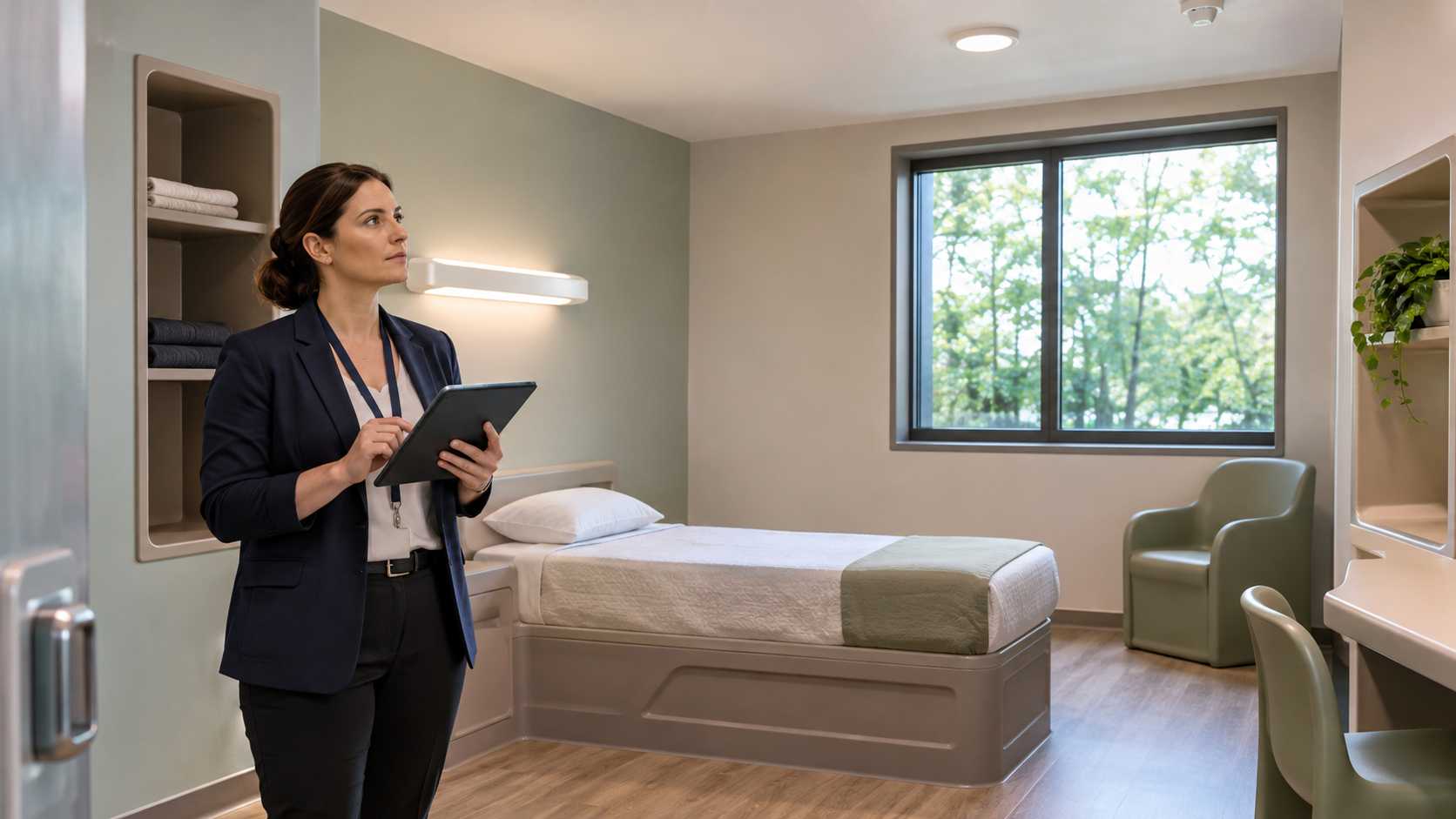
Inpatient mental health facilities provide structured care for patients experiencing psychiatric conditions that require close supervision and treatment. Their physical environment influences patient safety, emotional comfort, and daily experiences. Room layouts, furniture, lighting, and electronic equipment can introduce risks when they are not designed for psychiatric care. Facility managers must therefore consider how every part of the environment supports safe treatment.
Environmental risk assessments help healthcare teams identify potential hazards before incidents occur. These reviews cover patient rooms, bathrooms, corridors, and shared spaces. Electronic equipment also requires attention. For example, an LCD TV Enclosure describes protective housing designed to restrict access to television hardware in higher-risk psychiatric settings. The Joint Commission requires psychiatric hospitals and designated psychiatric units to assess environmental hazards associated with suicide risks and take appropriate preventive measures.
1. Reducing Potential Ligature Attachment Points
Ligature hazards are among the most serious environmental concerns in inpatient psychiatric facilities. These involve objects or structural features that could be used to secure materials for self-harm.
Potential hazards include exposed hooks, certain door hardware, plumbing fixtures, and other accessible attachment points. Their risks depend on the environment and the patients receiving care.
The U.S. Department of Veterans Affairs (VA) developed its Mental Health Environment of Care Checklist to help facilities identify environmental hazards associated with patient suicide and self-harm.
Facility managers can reduce exposure by evaluating door designs, selecting appropriate bathroom fixtures, and reviewing accessible structural features. Assessments should consider attachment points at different heights rather than focusing exclusively on overhead fixtures.
2. Selecting Tamper-Resistant Furniture and Fixtures
Furniture contributes to comfort and everyday activities, but unsuitable designs may create additional safety concerns. Loose components, breakable materials, sharp edges, and movable objects require careful assessment.
Psychiatric furniture is often designed with durable construction, rounded edges, secure fastenings, and materials suited to frequent cleaning. However, no single furniture specification works for every patient population.
The Joint Commission advises healthcare organizations to evaluate medical beds according to patient needs and potential safety risks. When equipment introduces unavoidable hazards, facilities need documented precautions.
Comfort must remain part of the decision. Furniture that feels excessively institutional can make treatment environments less welcoming. The goal is to create functional surroundings without introducing preventable hazards.
3. Protecting Electronic Devices in Patient Rooms
Televisions and other electronic devices can provide recreation, information, and opportunities for relaxation. However, exposed hardware, removable components, electrical cables, and mounting brackets may introduce safety concerns.
Protective television housings are one approach used in higher-risk psychiatric environments. These units can restrict access to internal components and help reduce tampering when properly specified and installed.
The VA Inpatient Mental Health Design Guide recommends securely mounted televisions or protective covers with tamper-resistant features. Its guidance also addresses concealed electrical connections and designs that reduce potential ligature hazards.
Facility teams should evaluate enclosure materials, installation methods, access for maintenance, and compatibility with clinical safety requirements.
Protective housing does not automatically make an electronic device safe. Installation quality, routine inspections, and the surrounding room layout remain essential considerations.
4. Maintaining Clear Visibility in Shared Spaces
Shared spaces support social interaction, recreational activities, and therapeutic programs. Their layouts should also allow staff to recognize situations that may require intervention.
Furniture placement, partitions, corridor intersections, and poorly positioned equipment can create areas that are difficult to observe.
The Joint Commission identifies environmental visibility as a consideration when assessing psychiatric units, particularly where architectural features limit routine observation.
Facilities can improve visibility through thoughtful furniture arrangements, appropriate lighting, and clearly defined circulation routes.
However, visibility should support clinical observation rather than create an atmosphere of constant surveillance. Staff presence, communication, and individualized monitoring plans remain important.
5. Managing Access to Electrical Cables and Equipment
Electrical systems support televisions, communication devices, medical equipment, and everyday facility operations. Yet accessible cords, damaged outlets, and unsecured equipment can present electrical or self-harm risks.
The VA Office of Inspector General documented environmental safety concerns involving accessible electrical cords and unsecured equipment in an inpatient mental health unit during a 2023 inspection.
Facilities can address these concerns by reviewing cable routes, securing equipment, protecting electrical connections, and restricting access to maintenance components where appropriate.
Electrical protection should also meet applicable building and healthcare safety requirements. Maintenance teams and clinical staff need coordinated procedures for reporting defects and responding to equipment damage.
These measures help maintain essential services while reducing avoidable exposure to hazards.
6. Balancing Patient Privacy With Appropriate Supervision
Privacy contributes to dignity, personal comfort, and respectful psychiatric care. Patients need suitable opportunities for personal activities, confidential discussions, and rest. Similar principles are discussed in guidance on creating a supportive home environment for mental well-being, where surroundings can influence emotional comfort and daily experiences. Although psychiatric facilities require additional safety measures, creating a calm and respectful setting remains an important consideration.
At the same time, certain clinical situations require closer supervision to reduce the likelihood of harm.
The Joint Commission explains that continuous one-to-one observation is not necessary for every patient receiving behavioral healthcare. Monitoring requirements depend on individual risk, environmental conditions, and organizational policies.
Facilities should therefore consider privacy when designing bedrooms, bathrooms, consultation spaces, and observation arrangements.
Supervision practices must reflect clinical assessments rather than applying identical restrictions to everyone. Clear communication can help patients understand why additional observation may sometimes be necessary.
7. Conducting Regular Environmental Safety Inspections
Safety assessments should continue after a facility opens or completes renovations. Daily operations, equipment replacement, maintenance work, and changes in patient needs can introduce new hazards.
The VA National Center for Patient Safety uses its Mental Health Environment of Care Checklist to support systematic reviews of inpatient mental health units. The program encourages facilities to identify hazards and address them through organized safety procedures.
Effective inspections involve more than completing checklists. Staff should document concerns, assign corrective actions, verify completed repairs, and review recurring problems.
Nursing teams, maintenance personnel, safety officers, and facility administrators each contribute valuable observations.
Regular reviews also help organizations determine whether earlier safety improvements remain effective under everyday operating conditions.
Creating Safer and More Supportive Treatment Environments
Environmental safety in psychiatric facilities requires continuous attention to design, equipment, maintenance, and patient needs. Reducing ligature hazards, selecting suitable fixtures, protecting electronics, and maintaining appropriate visibility can help limit preventable risks.
However, physical safeguards cannot replace professional judgment. Clinical supervision, staff training, individualized assessments, and respectful patient relationships remain central to safe psychiatric care.
As healthcare facilities evolve, environmental safety planning should continue alongside improvements in treatment practices. A well-managed environment can support patient dignity, reduce unnecessary hazards, and create more suitable conditions for recovery.